
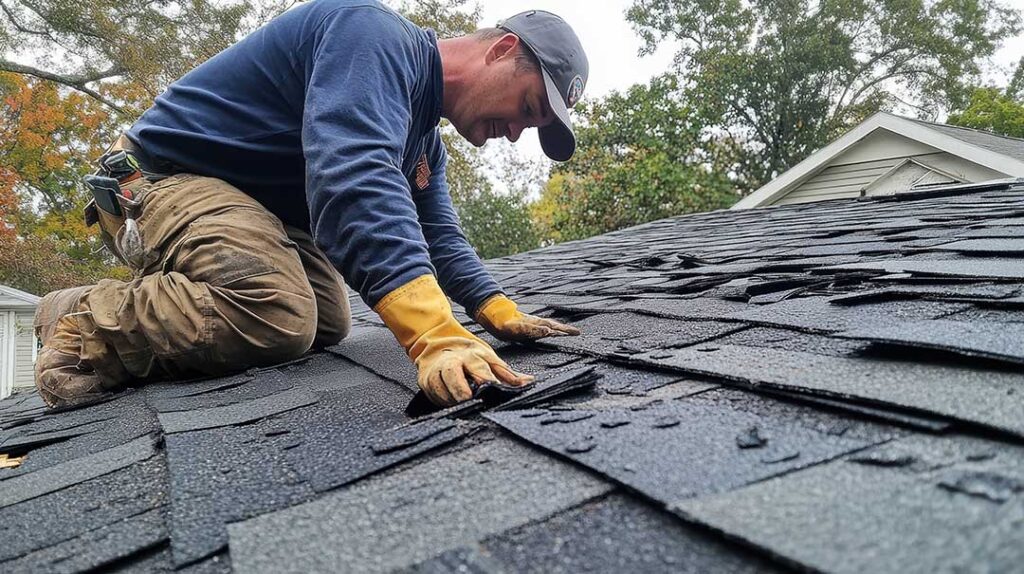
Roof shingles are the visible outer covering of a roof, but they are not the roof’s structural surface. Beneath them is the roof decking, a layer of wood or engineered panels attached to the rafters or trusses. Decking supports the roof covering, helps distribute loads, and provides the base for underlayment and flashing.
For homes in Gloversville, NY, understanding roof decking is useful because repeated snow, ice, rain, wind, and seasonal temperature changes can reveal weaknesses that are not obvious from the ground.
What is roof decking?
Roof decking, also called roof sheathing, is the panel material installed over the roof framing. Its main job is to create a continuous, stable surface for the rest of the roofing system.
Most residential roofs use one of these materials:
- Plywood: Strong, dimensionally stable, and commonly used in roof construction.
- Oriented strand board, or OSB: Made from compressed wood strands and widely used in modern homes.
- Tongue-and-groove boards: Found in some older houses, especially those built with individual wood planks rather than large panels.
- Structural boards or specialty panels: Used in certain additions, historic homes, or unusual roof designs.
The decking does not normally serve as the final weather barrier. Shingles or another roof covering shed most water, while underlayment adds another layer of protection. The decking supports these materials and helps transfer roof loads into the framing below.
Why does roof decking matter?
Damaged decking can affect much more than the appearance of a roof. If panels lose strength, fasteners may not hold properly, shingles may become uneven, and moisture can reach the attic or interior ceiling.
Sound decking helps:
- Support shingles, metal roofing, or other roof coverings
- Hold roofing nails securely
- Spread the weight of snow and maintenance activity across the framing
- Provide a firm base for underlayment and flashing
- Maintain the shape and alignment of the roof surface
- Reduce the risk of localized sagging
A roof can have relatively new shingles and still have a decking problem. The outer covering may conceal soft, weakened, or improperly fastened panels underneath.
What causes roof decking to deteriorate?
Moisture is the most common cause of decking damage. A small leak around a plumbing vent, chimney, valley, skylight, or roof edge can gradually wet the wood. Over time, the material may swell, delaminate, rot, or lose its ability to hold fasteners.
Other causes include:
Long-term condensation
Warm, moist air from the living space can enter the attic and condense on cold roof surfaces. Poor attic ventilation, gaps around ceiling fixtures, and inadequate air sealing can contribute to this problem. In cold seasons, repeated condensation and drying may weaken decking even when there is no obvious roof leak.
Ice-related water entry
Snow and ice can create conditions in which water backs up beneath roof coverings, especially near eaves, valleys, and areas with uneven roof temperatures. The resulting moisture may affect decking along the roof perimeter.
Wind and storm damage
Strong wind can loosen or lift roofing materials. Once the roof covering is disturbed, rain may reach the decking. Repeated exposure can lead to staining, swelling, or decay.
Age and previous repairs
Older decking may have experienced years of small leaks, fastener movement, and temperature changes. Previous repairs can also leave areas with mismatched materials, abandoned penetrations, or inadequate support.
How can homeowners recognize possible decking problems?
Some signs are visible from inside the attic or living areas. They do not always identify the exact cause, but they can indicate that further evaluation is needed.
Look for:
- Brown or dark water stains on attic-side wood
- Soft, crumbly, or spongy areas
- Musty odors near the roof structure
- Visible daylight through roof panels, excluding designed vents
- Sagging between rafters or trusses
- Ceiling stains or peeling paint below roof areas
- Roofing nails that no longer seem firmly embedded
- Shingles that appear wavy, uneven, or depressed
A small ceiling stain does not necessarily mean the decking is extensively damaged. Water can travel along rafters, insulation, or framing before appearing indoors. Conversely, a roof may have weakened decking without producing an interior stain.
Walking on a roof to investigate is risky and can cause additional damage. Attic observations from a stable, safe location are generally more appropriate for a homeowner, while steep, icy, or visibly damaged roofs should not be accessed.
Does every roof replacement require new decking?
No. Roof decking does not automatically need replacement simply because the shingles are being replaced. If the panels are dry, structurally sound, properly attached, and able to hold roofing fasteners, they may remain in place.
Replacement becomes more likely when decking is:
- Soft or rotten
- Delaminated or swollen
- Broken or excessively cracked
- Sagging because of inadequate support or deterioration
- Too thin or improperly installed for the roofing system
- Unable to hold nails securely
- Damaged around a known leak or roof penetration
A limited area may need repair, while broader deterioration may require replacing several panels. The decision should be based on the condition of the material, not simply the age of the roof covering.
How is damaged decking repaired?
The basic repair process involves exposing the affected area, removing weakened material, checking the framing, and installing properly sized replacement panels. The new decking must be supported by rafters or trusses and fastened according to the roof design and applicable construction requirements.
A careful repair also addresses the source of the moisture. Replacing wet wood without correcting the leak, condensation, or drainage problem allows the damage to return.
In some situations, the visible decking damage is only part of the issue. Rafters, trusses, insulation, fascia, or interior finishes may also have been affected. The extent of repair depends on how long the moisture was present and whether the framing remains structurally sound.
What should be checked during roof work?
Roofing work provides an opportunity to inspect areas that are normally hidden. Useful questions include:
- Is the decking plywood, OSB, or individual boards?
- Are there soft spots, stains, gaps, or sagging areas?
- Do roof penetrations show signs of past leakage?
- Are panel edges supported and properly fastened?
- Is the attic showing condensation or inadequate airflow?
- Does the roof framing appear straight and stable?
- Are replacement materials compatible with the existing structure?
Photographs of concealed damage can help document what was found, but images should be interpreted alongside the condition of the wood and the location of the moisture source.
Are building requirements relevant to roof decking?
Yes. Roof sheathing is part of the building structure, so installation and repair may be subject to local building requirements. Requirements can address panel thickness, fastening patterns, edge support, ventilation, snow loads, and the type of roof covering being installed.
Those details can vary according to the home’s design, construction date, roof span, materials, and the scope of the work. Safety and code questions are especially important when structural damage, major roof changes, or extensive decking replacement is involved.
For local residents, the practical lesson is simple: roof decking is not merely a layer hidden beneath shingles. It is a structural component that affects fastener performance, moisture resistance, roof shape, and the long-term reliability of the entire roofing system.
