
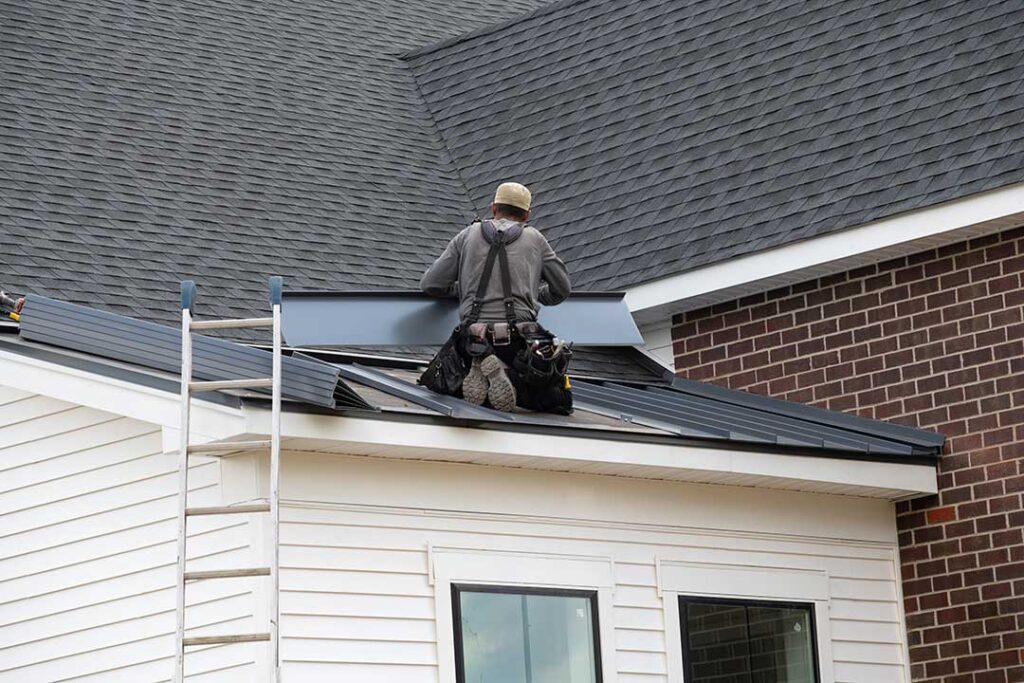
Strong winds can damage a roof without leaving an obvious hole or a large pile of debris. In Gloversville, NY, wind events may occur with thunderstorms, winter storms, passing cold fronts, or the pressure changes that accompany rapidly developing weather systems. Even moderate-looking damage can allow water to enter during the next rain or thaw.
Understanding how wind affects roofing materials helps residents inspect safely, recognize warning signs, and decide what needs attention first.
How does severe wind damage a roof?
Severe wind usually damages a roof by lifting, bending, loosening, or tearing components away from the roof surface. The most vulnerable areas are edges, corners, ridges, valleys, and places where roofing materials meet walls, chimneys, vents, or other penetrations.
Wind does not always strike evenly. Air pressure can rise beneath a loose shingle or flashing edge, while suction pulls upward on the surface above it. Repeated gusts can gradually weaken fasteners and seals even if the roof does not visibly fail during one storm.
Common forms of wind damage include:
- Missing or displaced shingles
- Creased, folded, or lifted shingles
- Torn rubber or metal flashing
- Loose ridge caps
- Damaged soffits, fascia, and gutters
- Exposed underlayment or roof decking
- Lifted sections around vents, chimneys, or skylights
- Fallen branches or other debris striking the roof
A roof may look mostly intact from the ground while still having small openings that permit water infiltration.
Which parts of a roof are most vulnerable?
Roof edges and corners generally experience stronger wind pressure than the central field of the roof. The first few rows of shingles along the eaves and rakes can be especially exposed. Ridge caps may also loosen because they sit at the highest points of the roof and catch air from changing directions.
Penetrations deserve close attention because they interrupt the continuous surface of the roofing system. Flashing around plumbing vents, chimneys, dormers, and roof-to-wall intersections can bend or separate during strong gusts.
Older roofs may be more susceptible because sealant strips have weakened, fasteners may have loosened, and previous repairs may no longer be fully secure. However, newer roofing can also be damaged if wind speeds are high enough or if debris strikes the surface.
What does wind damage look like from the ground?
A ground-level inspection can reveal several useful warning signs without requiring anyone to climb onto the roof. Look for shingles that appear darker, raised, uneven, or out of alignment. A small lifted edge may cast a noticeable shadow in sunlight.
Other signs include:
- Shingle pieces in the yard, driveway, or gutters
- Bare or irregular patches on the roof
- Bent metal flashing
- Sagging or detached gutters
- Loose fascia or soffit panels
- Roofing granules collected near downspouts
- A new water stain on an attic ceiling or upper-floor wall
- Daylight visible through the roof structure in the attic
A missing shingle is not the only concern. A shingle that remains attached but has a crease or lifted corner may no longer shed water properly.
Can wind damage cause leaks even if it does not rain immediately?
Yes. Wind damage can create a leak before water appears inside the home. Roof coverings are designed to direct water over overlapping layers. If a shingle is lifted, torn, or displaced, rain can travel beneath it and reach the underlayment or roof decking.
Leaks may not appear directly below the damaged area. Water can move along rafters, roof decking, insulation, or framing before reaching a ceiling. This is why an interior stain may be located several feet away from the actual roof opening.
In Gloversville, freeze-thaw conditions can make a small opening more troublesome. Water that enters a damaged area may freeze, expand, and create additional separation around roofing materials or flashing.
What should residents do immediately after a severe windstorm?
Start with safety. Do not climb onto a wet, icy, steep, or visibly damaged roof. Stay away from areas with fallen power lines, unstable branches, broken glass, or sagging structural materials.
From the ground, document visible damage with photographs if conditions are safe. Inside the home, check ceilings, upper walls, attic spaces, and areas around chimneys or roof penetrations for moisture.
If water is entering:
- Move furniture and belongings away from the affected area.
- Place containers under active drips.
- Avoid electrical fixtures or outlets that may have become wet.
- Use towels only where doing so does not require entering an unsafe area.
- Note the location, timing, and apparent source of the leak.

Temporary coverings should not be installed by walking on a compromised roof. A roof tarp can also create additional hazards if it is improperly secured or placed near utility lines.
Does every missing shingle require immediate attention?
A missing shingle should be addressed promptly, but the urgency depends on weather, the location of the damage, and whether the underlying layers are exposed. An isolated missing shingle may not produce an immediate interior leak, particularly during dry weather, but wind-driven rain can enter quickly through an open area.
Damage near a valley, chimney, wall intersection, or roof edge deserves special attention because those locations already handle concentrated water flow or increased wind exposure. Multiple missing shingles, exposed decking, widespread lifting, or active leaks may indicate a broader problem rather than a simple isolated repair.
A useful distinction is that cosmetic damage affects appearance, while functional damage affects the roof’s ability to resist water, wind, and temperature changes. Wind-related issues can be both at once.
How can wind affect gutters, soffits, and attic ventilation?
The roof system includes more than shingles. Wind can pull gutters away from the fascia, bend downspouts, loosen soffit panels, or detach fascia boards. These components help manage water and protect the roof edge from moisture.
Soffit damage can also affect attic ventilation. An opening may allow wind-driven rain, insects, or animals into the roof assembly. If insulation is disturbed or ventilation pathways are blocked, moisture may accumulate in the attic and contribute to condensation or deterioration.
Gutters filled with shingle fragments may indicate roof damage even when the roof surface is difficult to see. After a storm, check whether gutters remain straight, firmly attached, and properly draining.
When is a roof inspection unsafe or necessary?
A roof inspection is unsafe when there is ice, standing water, structural sagging, broken roofing materials, nearby electrical hazards, or unstable tree damage. Walking on a damaged roof can worsen the problem and create a fall risk.
An evaluation is particularly important when:
- Water is actively entering the home.
- Several roof areas show lifting or missing materials.
- The roof decking appears exposed.
- A tree or large branch has struck the roof.
- Flashing has separated around a chimney or wall.
- The attic contains wet insulation or visible daylight.
- The roof is older and has experienced repeated storm exposure.
Professional assessment may be necessary when safe access, structural judgment, or repair work is beyond a homeowner’s capabilities. This is especially true after a large branch impact or when the roof structure appears displaced.
Can homeowners reduce future wind damage?
Preventive maintenance can reduce vulnerability, although no roof can be made completely immune to severe weather. Keep roof drainage clear, trim branches that overhang the roof, and address loose flashing, deteriorated sealants, or damaged soffits before storm season.
Residents should also know the age and general condition of the roof. A roof with brittle shingles, previous patching, or recurring leaks may respond differently to wind than a newer, well-maintained system.
After major storms, inspect the property from the ground and check the attic when conditions are safe. Early detection can prevent a small opening from becoming extensive moisture damage during the next rain, snowfall, or spring thaw.
